
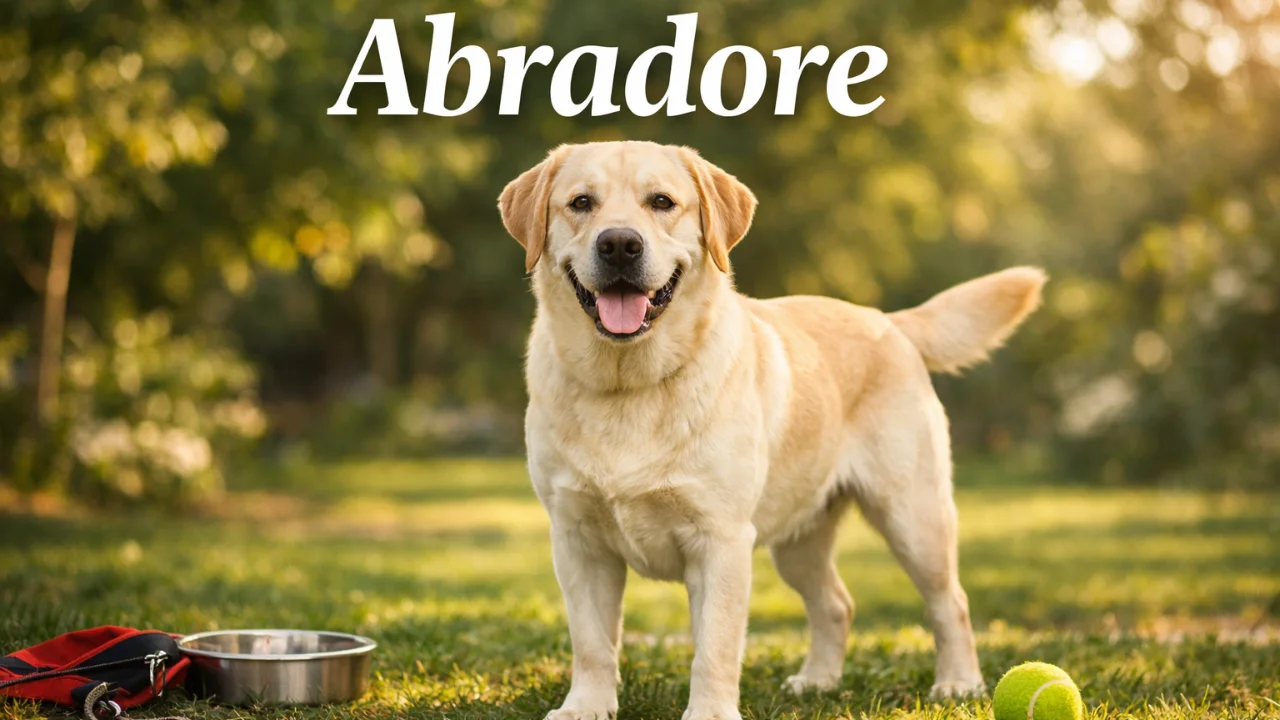
Introduction
You don’t casually end up with an abradore. People either commit fully or regret it within months. There’s no middle ground. The energy, the appetite, the constant need for attention—an abradore will expose how prepared you really are for a dog. And yet, despite all that, homes keep choosing an abradore over quieter, easier breeds. That says a lot.
The personality that wins people over (and wears them out)
An abradore walks into a room like it owns the place but somehow still feels like your best friend within minutes. That balance of confidence and warmth is rare. Most dogs lean one way—either shy or overly dominant. An abradore doesn’t bother with that confusion.
They’re intensely social. Leave an abradore alone for too long and you’ll see the consequences quickly—chewed furniture, restless pacing, or that low, frustrated whining that makes you feel guilty even if you had a good reason to leave. This isn’t a dog that tolerates isolation.
What stands out is their emotional awareness. An abradore picks up on mood shifts faster than most people. Sit quietly after a bad day, and you’ll feel a nose nudge your hand within minutes. It’s not trained behavior. It’s instinct.
That said, this same emotional sensitivity can turn into stubbornness. An abradore doesn’t respond well to harsh discipline. Push too hard, and you’ll get resistance instead of obedience.
Energy levels that demand structure
Anyone thinking an abradore is just a friendly house pet is setting themselves up for chaos. This is a working dog at its core. Without physical outlets, that energy doesn’t disappear—it redirects.
A short walk won’t cut it. An abradore needs space to run, things to chase, tasks to complete. Fetch isn’t just a game here—it’s almost a necessity. Water activities are even better. Give an abradore access to a lake or pool, and you’ll see a different level of happiness.
The problem isn’t energy alone—it’s unmanaged energy. Owners who don’t build routines often complain about “bad behavior,” but most of the time, the abradore is just bored.
Daily structure changes everything:
- Morning activity to burn off initial excitement
- Midday engagement (even short training sessions)
- Evening physical exercise
Skip any of these consistently, and your abradore will invent its own version of entertainment.
Intelligence that requires real engagement
An abradore learns quickly, but that doesn’t automatically make things easier. It actually raises the stakes. Smart dogs don’t just follow instructions—they test boundaries.
Training an abradore isn’t about repetition alone. It’s about consistency and timing. They respond best when they understand the reward clearly and immediately. Delay that feedback, and the connection breaks.
This intelligence also shows up in problem-solving. Leave food unattended, and your abradore will figure out how to reach it. Lock it away poorly, and it becomes a puzzle worth solving.
That’s why mental stimulation matters just as much as physical exercise. Puzzle toys, scent games, and varied training routines keep an abradore focused. Without that, they start making their own decisions—and those decisions rarely align with what you want.
Living with an abradore: the daily reality
There’s a romantic version of owning an abradore, and then there’s the real version.
The real version includes shedding. Not occasional, not seasonal—constant. Your clothes, your couch, your floor—it’s all part of the deal. If that bothers you, no amount of affection will compensate.
Then there’s the appetite. An abradore doesn’t just enjoy food—it’s driven by it. This makes training easier but also creates risk. Overfeeding is common, and weight gain happens faster than most owners expect.
You’ll also deal with space issues. An abradore isn’t built for cramped living conditions. Even if it adapts, it won’t thrive. Movement is part of its nature.
Despite all this, people stick with it. Because the trade-off is loyalty that feels almost excessive. An abradore doesn’t just live with you—it attaches to your routine, your habits, your presence.
Why families keep choosing abradore over other breeds
There are quieter dogs. Cleaner dogs. Easier dogs. Yet families still choose an abradore again and again.
The reason isn’t convenience. It’s predictability in temperament.
An abradore rarely shows aggression without cause. Around children, that patience becomes obvious. You’ll see tolerance that would test other breeds—tail pulling, loud play, unpredictable movement—and the abradore absorbs it with surprising calm.
That doesn’t mean supervision isn’t needed. It always is. But the baseline temperament makes a difference.
Another factor is adaptability. While an abradore prefers space, it can adjust to different environments if its needs are met. Urban or rural, large home or modest one—the key variable isn’t the space itself, it’s how the owner manages activity and engagement.
The health side people underestimate
Owning an abradore comes with responsibilities beyond feeding and exercise. Health management is one of the most overlooked aspects.
Joint issues are common, especially as the dog ages. Rapid growth during puppy stages can contribute to long-term problems if not managed properly. Diet plays a role here, as does controlled exercise early on.
Weight is another concern. An abradore will eat more than it needs if given the chance. That’s not a personality quirk—it’s a real health risk. Extra weight puts pressure on joints and reduces overall lifespan.
Regular vet visits aren’t optional. Preventive care matters more with an abradore because small issues can escalate quickly if ignored.
Training mistakes that ruin the experience
Most frustration around an abradore comes from avoidable mistakes.
Inconsistency is the biggest one. If rules change depending on the day, the dog stops taking them seriously. Let an abradore jump on guests once, and it becomes a habit.
Another mistake is delaying training. People assume friendliness equals ease, but early structure is critical. A fully grown abradore with no boundaries is difficult to manage.
Over-reliance on treats can also backfire. While food motivation is useful, it shouldn’t be the only tool. An abradore needs to respond to commands even without rewards in sight.
Lastly, lack of patience. This breed matures slowly. Expecting perfect behavior too early leads to frustration on both sides.
The emotional payoff that keeps people loyal
Strip away the effort, the mess, the daily demands—what remains is the reason people stay committed to an abradore.
It’s the way they greet you like you’ve been gone for years, even if it’s been minutes.
It’s the silent companionship during quiet moments.
It’s the sense that this dog isn’t just following you—it’s tuned into you.
An abradore builds a connection that feels personal, not mechanical. That’s hard to explain until you experience it.
The truth about whether an abradore fits your life
Not everyone should own an abradore. That’s not criticism—it’s reality.
If you prefer quiet, low-maintenance routines, this isn’t the right match. If you don’t have time for daily activity, it won’t work. If you expect a dog to adapt without effort on your part, you’ll be disappointed.
But if you’re willing to invest time, energy, and attention, an abradore doesn’t just fit into your life—it reshapes it in a way that feels worth it.
That’s the real trade.
Conclusion
An abradore isn’t impressive because it’s easy. It stands out because it demands something from you—and then gives back more than most people expect. The challenge isn’t whether the breed is good. The real question is whether you’re ready to meet it halfway.
FAQs
1. How much daily exercise does an abradore realistically need?
At least 1–2 hours of active movement. Not just walking—running, fetching, or swimming makes a noticeable difference in behavior.
2. Is an abradore suitable for apartment living?
It can work, but only if the owner compensates with consistent outdoor activity. Without that, problems show up quickly.
3. Why does an abradore seem constantly hungry?
Food motivation is part of its nature. Controlled feeding and portion discipline are necessary to avoid weight issues.
4. At what age does an abradore calm down?
Most start settling between 2 to 3 years, but energy levels stay higher than average even in adulthood.
5. Can an abradore be left alone during work hours?
Yes, but not without preparation. Exercise before leaving, mental stimulation, and gradual training help prevent destructive behavior.
You May Also Read: Coolkingzone com: Detailed Review, Key Features and Insights